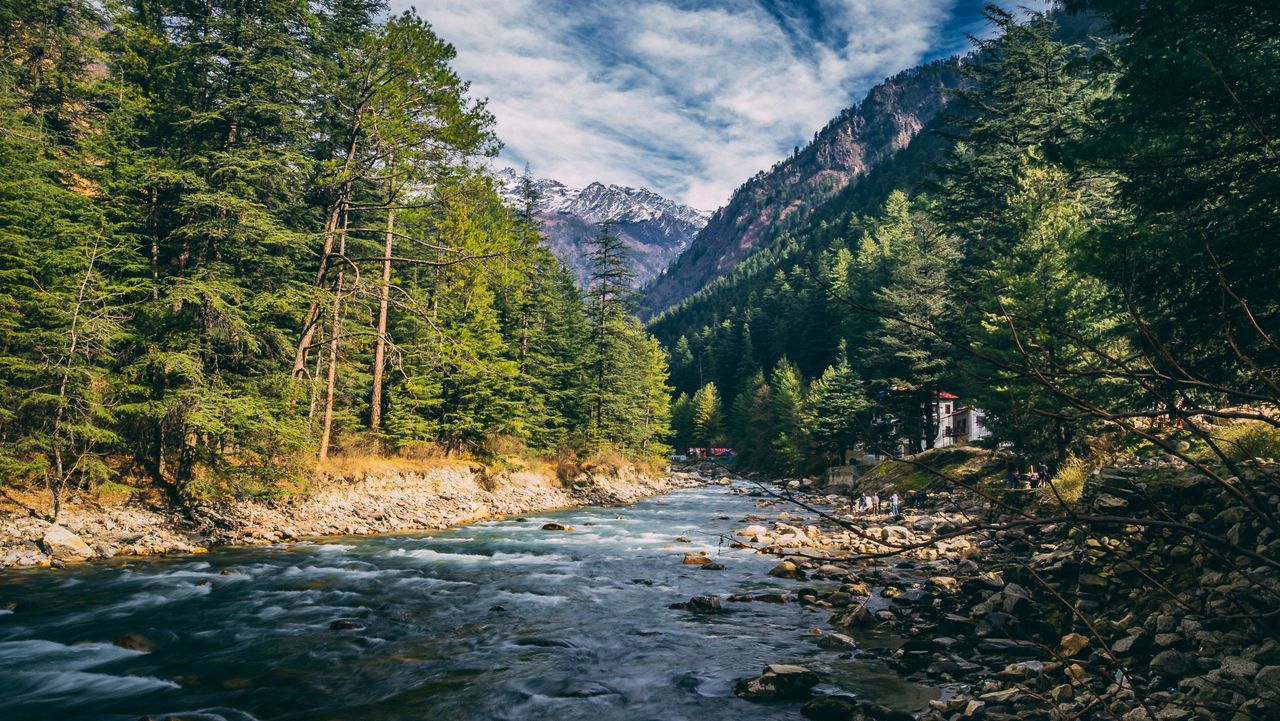

Tirthan is what people mean when they say they want "Kasol before it got busy": a narrow green valley, a fast clear river, homestays with trout on the menu, and almost no nightlife. It takes a little more effort to reach, which is exactly why it's still quiet.
Getting there
There's no direct bus or train from Delhi that we can book to Tirthan. The usual way in is an overnight bus towards Kullu and Manali, getting off where the road turns into the valley, and a taxi for the last stretch. Book that taxi before you leave Delhi, so it's waiting when the bus gets in early in the morning.
If you're flying, Kullu (Bhuntar) airport is about 40 km away. The nearest railhead of any use is Shimla, about 65 km away, which isn't practical for a weekend.
When to go
From our climate data for the valley:
- October and November: 6–22°C, about 4–5 rainy days a month. The best time: clear, crisp, the river at its prettiest.
- March to June: 4–26°C. Green and pleasant, busier in May and June.
- December to February: nights around 0–2°C, occasional snow. Quiet and cold.
- July and August: about 22 rainy days a month. The road to the valley is landslide-prone.
Saturday: Chhoie waterfall and the river
- Walk from Nagini village to Chhoie waterfall, about an hour each way through forest.
- Lunch with Tirthan trout at your homestay.
- In the afternoon, a village walk to Bandal or Pekhri along the river.
If you fish, trout fishing on the Tirthan needs a permit from the fisheries department. Your homestay can usually point you to it.
Sunday: the national park and Jalori Pass
Start at 8 am at the Sai Ropa range office, about 5 km from Gushaini: the Great Himalayan National Park interpretation centre and a short eco-trail. A UNESCO World Heritage Site, right at the end of the valley.
Then drive via Banjar to Jalori Pass (about 3,120 m), about 30 km, and walk 5 km to Serolsar lake and the Budhi Nagin temple. Be back down by late afternoon for the ride to the bus.
Combine it with Jibhi
Jibhi, about 9 km away, has the wooden homestays and the small waterfall you've seen on Instagram. On a long weekend, split your nights between the two. And for the people who want a real hike, a day hike into GHNP from Gushaini or the Chehni Kothi tower village with a local guide.
See plans for your dates on the Tirthan Valley weekend guide.
Questions people ask
Is there a direct bus from Delhi to Tirthan Valley?
Not one we can book. The usual way is an overnight bus towards Kullu and Manali, getting off where the road to the valley turns off, and a taxi from there. Book the taxi in advance so it's waiting when the bus gets in.
When is the best time to visit Tirthan Valley?
October–November and March–June. Our climate data has about 4–5 rainy days in October and November, against about 22 in July and August.
How high is Jalori Pass?
About 3,120 m, roughly 30 km from the valley via Banjar. From the pass it's a 5 km walk to Serolsar lake.
Plan Tirthan Valley for your dates
Your weekend and your group: the train or bus, where you'd stay, every day planned and one all-in price per person. We book all of it and confirm it before you pay.

Written by
Dhruv Shah
Founder, Tavora and RailRoute
I build Tavora and RailRoute. RailRoute started with Indian Railways data: which trains run on time, which routes actually work. Tavora uses it to plan weekends out of Delhi end to end. Here I write about leaving on a Friday night and being back for Monday.
More from Dhruv →